
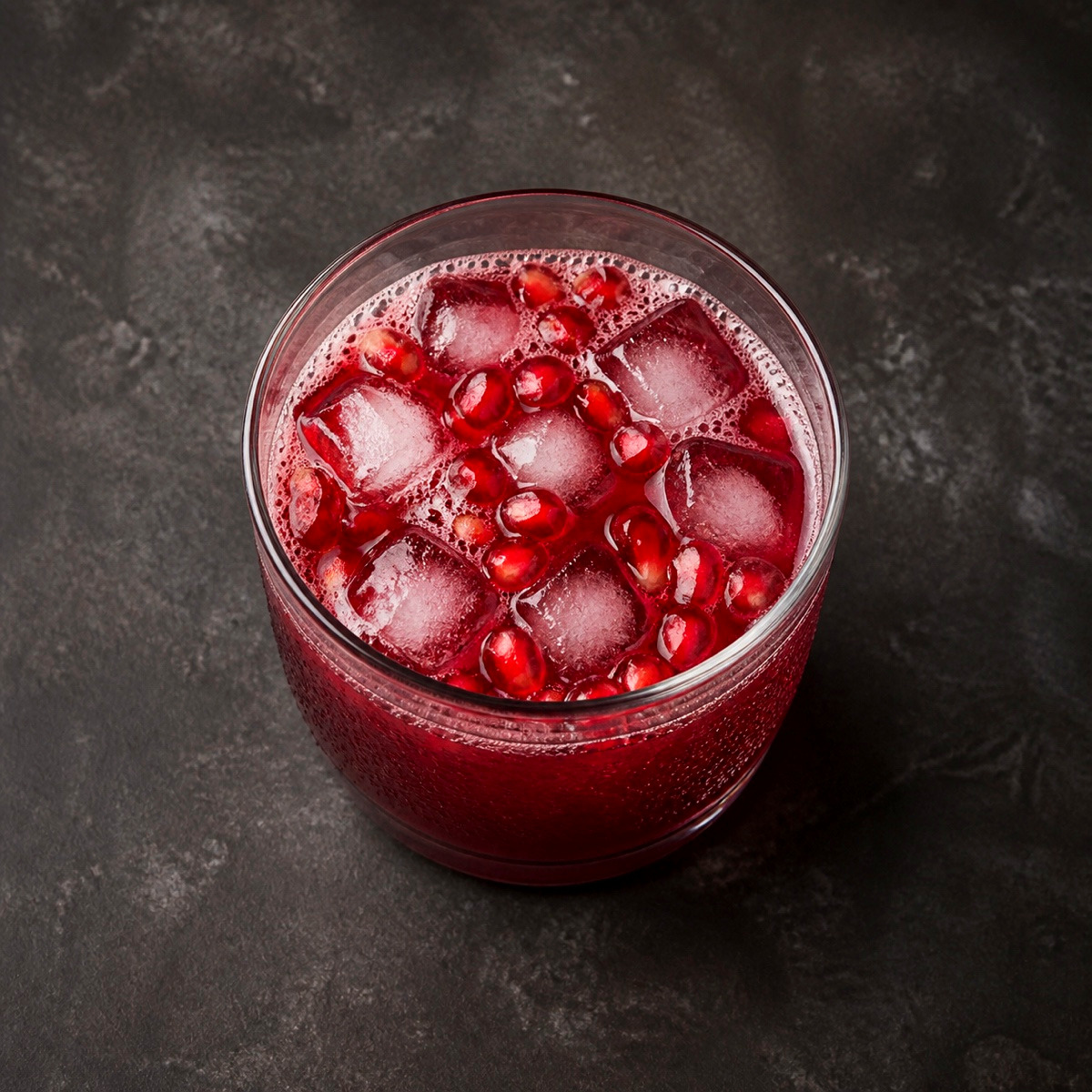
Pomegranate juice
Pomegranate seeds pulsed briefly and strained — deep red, sweet and tart with no bitterness.
Vegan
- Cooking time
- 15 min
- Hands-on time
- 15 min
- Difficulty
- Easy
- Calories
- 140
All the bitterness in pomegranate juice comes from two places: the white membrane and broken seeds. So the seeds are separated in a bowl of water, where the seeds sink and the pith floats, and blended in short pulses only so the seeds stay whole.
Before you start
- Before you beginRead the steps completely, measure the ingredients, and prepare the tools before turning on the heat or oven.
- Timing the servingPrepare what you can in advance and leave the final touches until serving time to maintain the texture.
Ingredients
Amounts follow the number of people
For juice
The quantity can be doubled, adjusting the sweetness after tasting, and adding ice to each cup when serving.
Equipment
- Wide bowl of water — Separates seed from pith — the seeds sink, the white floats.
- Blender — Short pulses only; long blending breaks the pips and turns the juice bitter.
- Fine strainer — Removes what is left of the pips after blending.
Method
Separate the seeds in a bowl of water — the seeds sink and the white pith floats.
You’ll know it’s ready whenThe seeds at the bottom are free of pith.
Tip: The white pith is where all the bitterness comes from.
Blend the seeds in short pulses only, then strain through a fine sieve.
You’ll know it’s ready whenThe juice is dark red and the seeds are intact in the strainer.
Tip: Blending hard breaks the seeds and releases their bitterness.
Taste it and add sugar if necessary, and serve it cold.
You’ll know it’s ready whenThe taste is sweet and sour without bitterness.
More from Drinks
Arabic coffee
21 min
Avocado cocktail
12 min
Banana milkshake
8 min

Black tea
10 min

Carob syrup
25 min

Fresh lime juice
10 min