
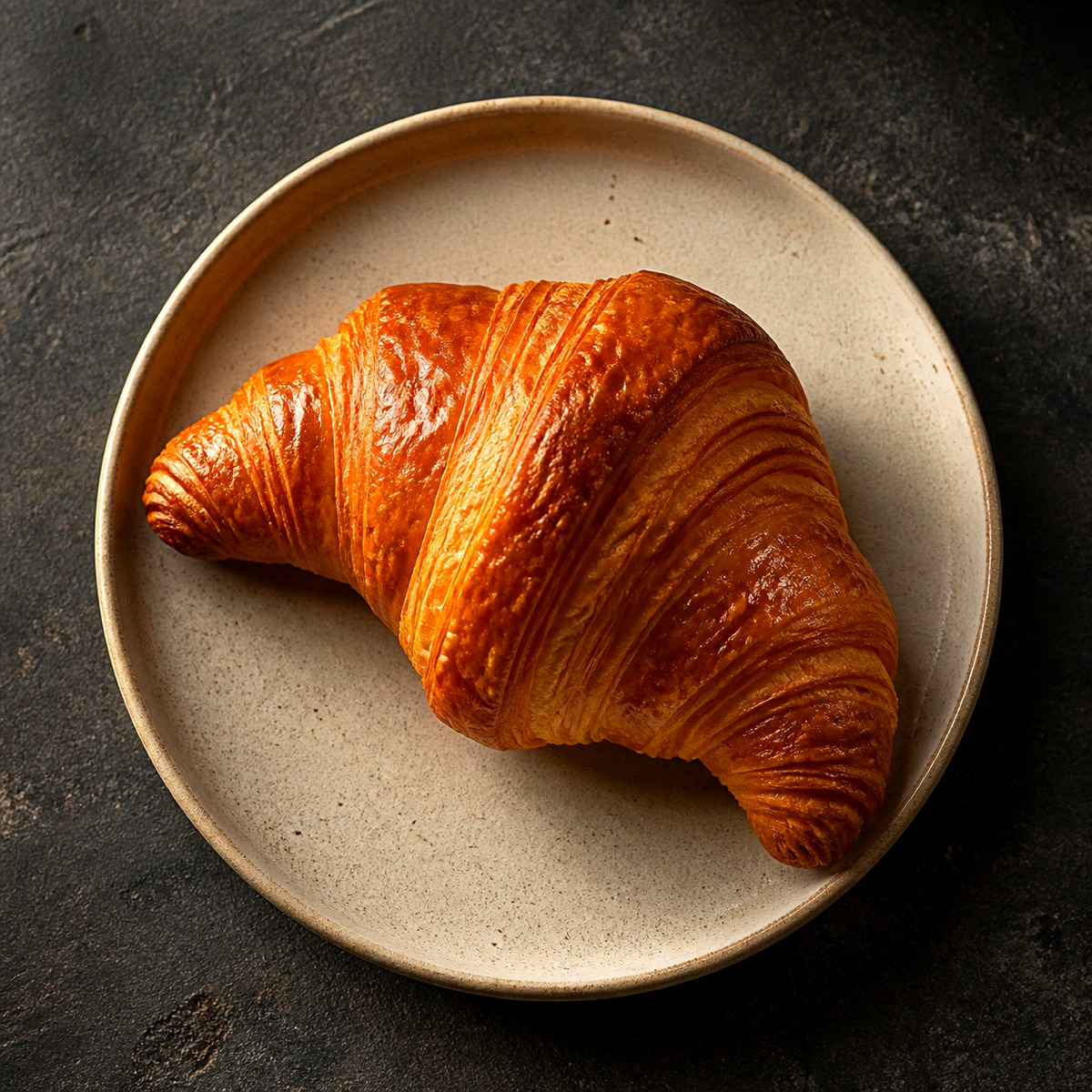
Butter croissants
Crisp, paper-thin layers of buttery pastry — a weekend project worth every minute.
Vegetarian
- Cooking time
- 11 hr 56 min
- Hands-on time
- 1 hr 38 min
- Free time
- 8 hr
- Difficulty
- Hard
- Cuisine
- French
- Calories
- 480
- Contains
- Gluten, Dairy, Eggs
The croissant isn't just a recipe, it's a little craft: butter folded into the dough, creating hundreds of layers that puff up in the oven like crisp, golden paper. The first bite of a croissant you've made is worth the whole journey.
Before you start
- Two-day planDay 1: Kneading and overnight chilling. Day 2: Folding, shaping, and baking. Chilling is the friend of layers — and rushing is their greatest enemy.
Ingredients
Amounts follow the number of people
For the dough
For folding and the top
Croissants are an easy two-day project (knead today, fold and bake tomorrow) — they cannot be rushed, and that is the secret of their layers.
Equipment
- Rolling pin — Rolling and folding three times is the croissant itself; a bottle will not do it.
- Baking paper — The butter block is beaten flat between two sheets until pliable and cold.
- Baking tray — After two hours proving and an egg wash, at 200°.
Method
Knead the dough ingredients and refrigerate it overnight.
You’ll know it’s ready whenA slightly stiff, cold dough that is easy to roll out.
Tip: Add the liquid gradually, because flours absorb differently.
Pound the butter for folding between two sheets of paper into a cold, pliable square block.
You’ll know it’s ready whenThe butter block is square, pliable and still cold.
Tip: Check the doneness cue before moving on to the next step, rather than relying on the time alone.
Cover the butter block with the dough, roll it out lengthwise and fold it three times, chill it for half an hour — and repeat the rolling and folding three times.
You’ll know it’s ready whenA smooth dough in which the butter lines appear marbled without breaking through.
Tip: The butter has softened and started to seep out of the dough? Refrigerate immediately — the cold will fix everything.
Roll it out thinly and cut it into long triangles, then roll each triangle from its base to its tip, and leave it to puff up for two hours.
You’ll know it’s ready whenPuffed and wobbly, as if it might float away.
Tip: Cut the pieces to the same size so they all cook at the same time.
Brush it with egg and bake at 200°.
You’ll know it’s ready whenDeep golden brown with visible flaky layers — and light in your hand.
Tip: Preheat the oven and monitor the color in the last few minutes.
What this teaches
More from Pastries

Cheese breadsticks
2 hr 4 min

Cheese and egg pide
2 hr 9 min

Cheese fatayer
1 hr 56 min

Cheese pizza
2 hr 5 min
Milk bread (dinner loaves)
2 hr 6 min
Focaccia
2 hr 57 min